

Dear Friend,
Today, I would like to dedicate our usual seasonal insight to an element that is closely connected to our work, yet rarely discussed, despite being fundamental to everything we do: water. Let me start with a provocative thought: if you ever visit a winery and want to ask an uncomfortable question, try asking where all the water used every day, at every stage of production, actually ends up.
Water is everywhere in a winery. We use it to wash tanks, clean barrels, carry out wine racking and wash floors. At the end of each working day (especially during the harvest), the water we have used becomes waste. It contains organic residues, sugars, detergents and small particles of grape skins and pulp. In other words, it becomes wastewater that needs to be treated and disposed of.
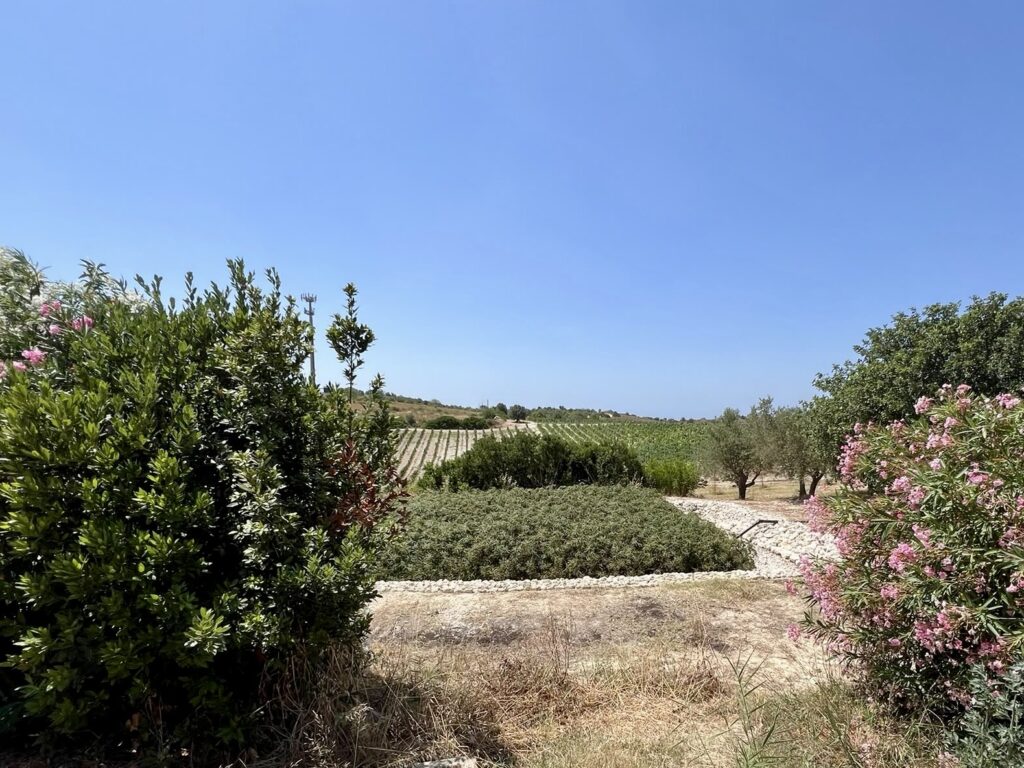
Here at Marabino, we made a very clear decision some time ago: to treat all the wastewater from our winery through a natural constructed wetland system and return it to the environment. Our phytoremediation system was developed under the scientific supervision of Professor Mirco Milani, Associate Professor of Agricultural Hydraulics and Soil and Water Conservation at the University of Catania, who oversaw the entire design and implementation process.
This is not a chemical treatment unit, but a living system. The wastewater from the winery flows slowly through waterproofed basins where aquatic plants such as papyrus, irises and rushes grow. The roots of these plants, together with the microorganisms living around them, do the most important work: they filter, oxygenate and naturally break down organic matter, returning water that is completely clean and can safely be returned to the land.
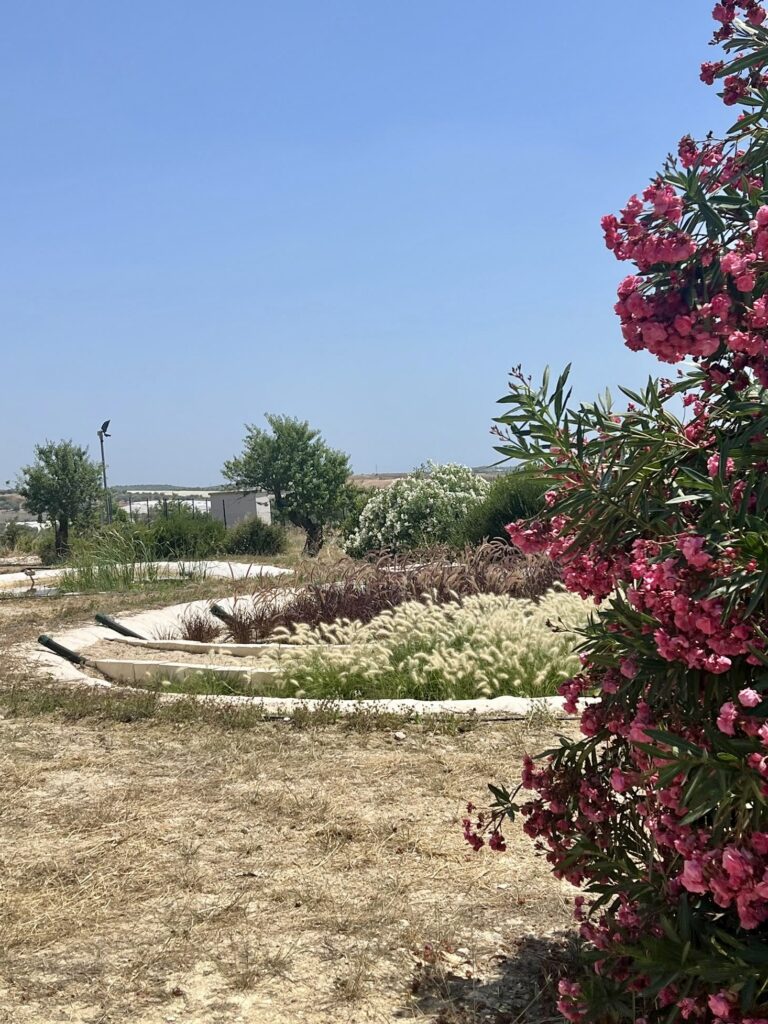
Our wastewater treatment system consists of three filtration and purification basins. The water and solid matter coming from the winery first flow into an Imhoff tank, made up of two underground compartments connected hydraulically: a sedimentation chamber and a sludge digestion chamber. The wastewater then moves into the first constructed wetland, which uses a horizontal subsurface-flow system. It is filled from the bottom upwards, and this is where the purification process begins, thanks to the action of Cyperus alternifolius plants. The journey continues into the second basin, where the water follows a different path: it is introduced from top to bottom through a vertical subsurface-flow treatment system, where Pennisetum villosum and Pennisetum setaceum ‘Rubrum’ do their work. These plants are arranged in a circular pattern, separated by an S-shaped pathway that recalls the Taijitu symbol (yin and yang), creating a harmonious and visually pleasing design. The final basin, like the first, uses a horizontal subsurface-flow system and is planted with Iris pseudacorus. At the end of this journey, the fully treated water reaches a natural pond, a source of life that enriches our hillside with biodiversity. When the pond contains excess water, it is channelled towards the irrigation of our Mediterranean maquis hedges.
This constructed wetland system is the result of an ethical choice even before being a technical one. Making organic wine from biodynamic agriculture means, first and foremost, respecting soil fertility and the life it sustains. It would make little sense to nurture our vineyards with cow horn manure preparations, green manures and natural herbal decoctions (all practices I have told you about in previous months), only to then return contaminated, polluted water to that very same soil.
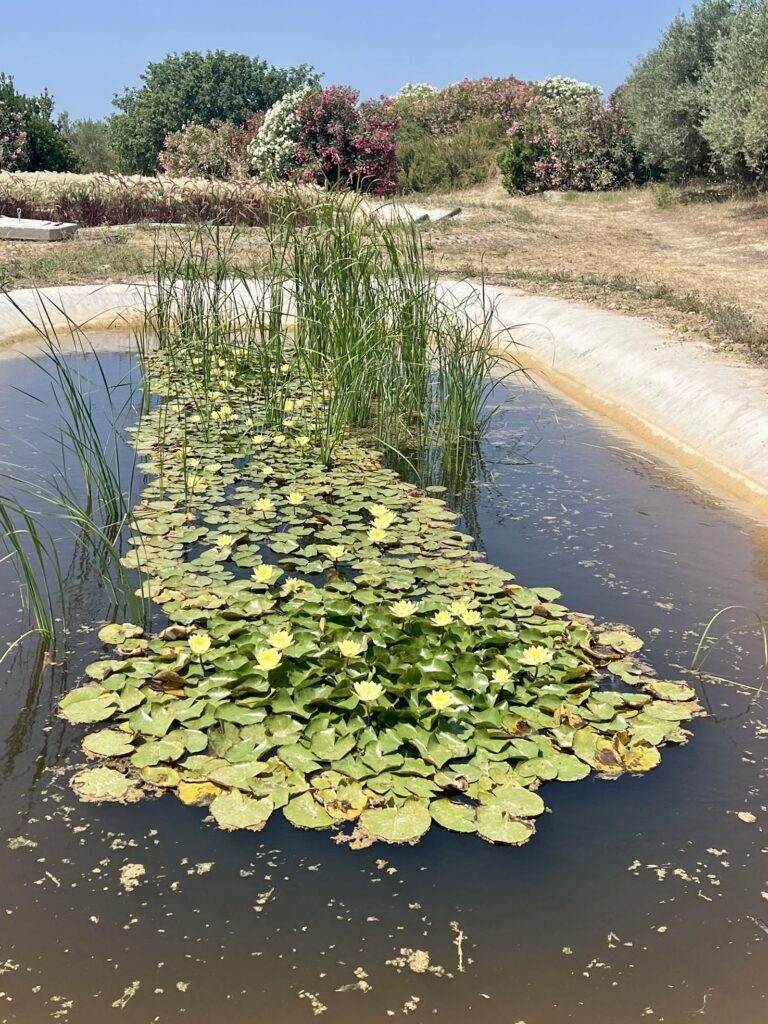
Consider that producing one litre of wine requires, on average, between three and four litres of water. That is a considerable amount. This is why I believe that natural wastewater treatment completes the cycle: it allows us to avoid wasting such a precious resource as water, protect groundwater from pollution and give back to our land something that naturally belongs to it. It may not be a particularly visible gesture, but I believe it is both consistent with our philosophy and necessary. It is my way of saying that respect for the environment does not end in the vineyard: it continues inside the winery, too.
Sustainability must be all-encompassing. It should be reflected not only in the result of our work — the wine in the bottles — but also in what we leave behind.
See you soon, and thank you,
Pierpaolo